
+44 (0)1335 347169

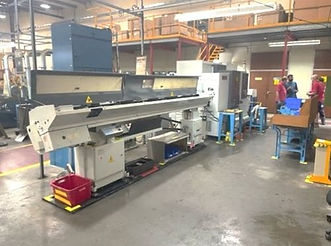
What the team did
Most people think 5S is about making an area look tidy.
This activity shows why that misses the point.
The team used our 5S training to learn how to sort essential from non-essential items, red tag problems, clear space, create homes for items, and expose issues affecting safety, quality, and daily work.
.jpg)
Sort

The team red tagged items and separated essential from non-essential.
Set
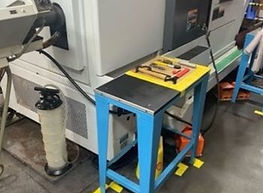
Items were given clear homes so the area was easier to manage.
Shine

They cleaned and inspected the area to reveal hidden problems.
The numbers behind the activity
-
86 red tags
-
68 essential items identified
-
18 non-essential items identified
-
13 essential items still outstanding after 3S
These numbers matter because 5S is not about creating a neat-looking area for a photo.
It is about making decisions visible.
What belongs here?
What doesn't belong here?
What needs a home?
What still needs action?
A good red tag process gives the team a practical way to stop accepting the mess, confusion, and workarounds that often become normal over time.

Good 5S Makes Problems Visible
The most useful part of this activity was not just what was removed.
It was what the team uncovered.
Good 5S does not hide problems.
It exposes them.
Safety (loose interlock)

Safety issues are easy to miss when an area is cluttered or people are used to working around problems.
Quality (loose air pipe)
Small issues like this often create frustration, slow people down, or affect how consistently the work is done.
Broken (cover)
Broken items often stay in place because people get used to them. 5S helps challenge that habit.
Homeless (handle & key)
That might sound small, but it is exactly the kind of issue that creates wasted time, searching, frustration, and inconsistency.
5S is not about looking tidy.
When the workplace is unclear, people waste time, standards slip, and problems stay hidden.
When the workplace is clear, the team can act faster, manage the area better, and stop accepting poor conditions as normal.
Want Your Team to Do This Properly?
Our 5S Online Course is designed to help you apply this thinking in your own workplace.
It does not treat 5S as a tidy-up exercise.
It walks you through the practical steps needed to understand, apply, and sustain 5S properly.
You’ll learn how to:
-
Understand what 5S really means
-
See why 5S matters at work
-
Run a practical 3S blitz
-
Use red tagging properly
-
Create clear workplace standards
-
Build and use 5S checksheets
-
Use audits without turning them into a tick-box exercise
-
Sustain the gains so the area does not slide backwards
